
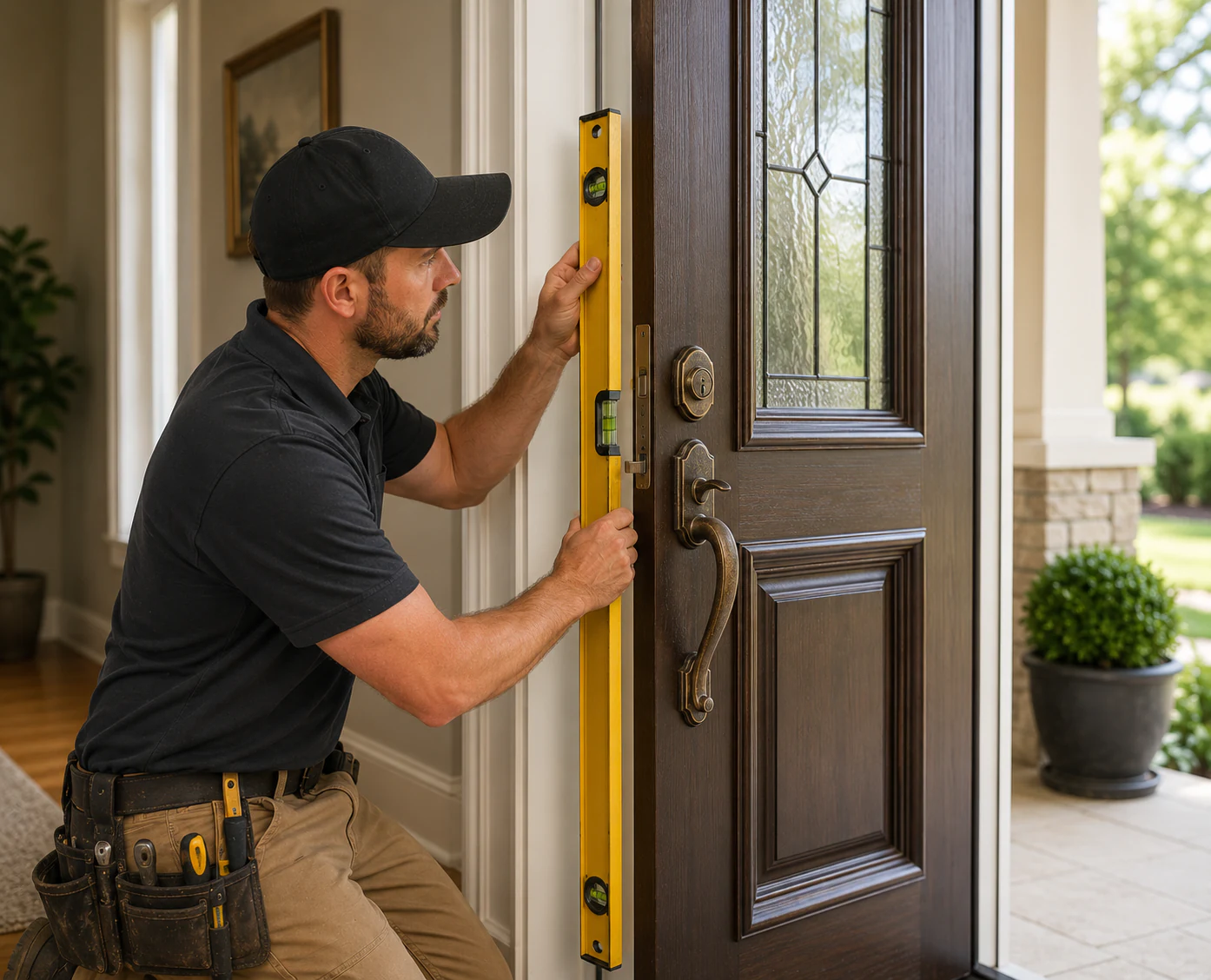
A draft around an exterior door does not automatically mean the door needs to be replaced.
If the door and frame are still sound, worn weatherstripping or an alignment problem may be all that needs attention. Significant rot or deterioration can change that decision, especially when the door and frame have reached the end of their useful life.
When I look at a drafty door, I start with its overall weathering and condition. I want to understand what is allowing air through before deciding whether the right answer is a new seal, an adjustment, a repair, or replacement.
For a Central Ohio homeowner heading into colder weather, that inspection is a useful place to start. You may have a straightforward maintenance task. You may also find a problem that deserves more attention than another strip of foam.
Start by Finding Where the Air Is Coming From
Look around the closed door from inside the house. Check the top, both sides, the bottom, and the surrounding frame. A strip of daylight or an uneven gap gives you a place to investigate.
Then open the door and look at the parts that meet when it closes:
- The weatherstripping along the top and sides
- The sweep or bottom seal
- The threshold beneath the door
- The hinges and latch
- The door edges and frame, including the lower corners
Look for deterioration, missing material, loose hardware, and general wear. Notice whether the gap is consistent or becomes wider toward one corner.
Air coming between the moving door and its frame is a different clue from air coming around the outside of the frame or trim. Weatherstripping addresses the door's closing surfaces. It may not address a gap elsewhere in the opening.
These observations help narrow the problem. They do not, by themselves, tell you that the entire door has failed.
When Worn Weatherstripping Is the Main Problem
Weatherstripping needs to make contact when the door closes. If it is torn, missing, brittle, flattened, or pulling away, it may leave an air path even when the door itself is in good condition.
A reasonable candidate for seal replacement is a sound door that closes and latches properly but has visibly deteriorated weatherstripping where the draft occurs.
The replacement needs to suit the door. Match the attachment method and profile, and follow the door or weatherstripping manufacturer's instructions. The thickest material on the shelf is not automatically the best choice.
A seal should make proper contact without making the door difficult to close. Adding extra material to compensate for a different problem can leave you with a door that still leaks in one place and binds in another.
A Columbus Door That Did Not Need Replacement
On a repair in Columbus, I found a solid wood door with paint that was still in very good condition. The door itself was worth keeping.
The rubber weatherstripping had deteriorated.
I replaced the strip instead of replacing the door. That addressed the worn component and avoided an unnecessary new door.
That is why the overall condition matters. An older door can still be serviceable even when the material sealing its edges has worn out.
When the Door Needs an Adjustment
A good weather seal cannot do its job consistently if the door does not meet it properly.
An uneven gap, rubbing edge, loose hinge, or door that must be lifted or pushed hard to latch can point toward an alignment or hardware concern. Those signs deserve inspection before you assume the seal is too thin.
Check how the door sits in the opening and how it behaves through a normal opening and closing cycle. Does it settle into the frame evenly? Does the latch engage without forcing it? Does the closed door feel loose?
Depending on what is found, a hinge or latch adjustment may help the door make proper contact with its seal. Some doors need both an adjustment and replacement weatherstripping.
This is also where the condition of the frame matters. Loose hardware in otherwise sound material is different from hardware that cannot hold because the wood around it has deteriorated. Repeatedly adjusting a door without addressing damaged supporting material may not provide a lasting repair.
Do Not Overlook the Bottom of the Door
If the draft is concentrated near the floor, inspect the bottom seal and threshold. Replacing the strips along the sides will not correct a missing or damaged sweep underneath.
Look for visible gaps, worn material, and damage where the bottom of the door meets the threshold. Check the corners too, where the side seals and bottom seal meet.
The goal is appropriate contact across the opening while the door continues to operate normally. A sweep that drags heavily or interferes with closing needs another look. Follow the instructions for the particular door and threshold rather than assuming every assembly adjusts the same way.
Frame Damage Changes the Repair Decision
The frame is part of the door system. A sound door cannot make up for a jamb or threshold area that is badly deteriorated.
Pay attention to soft or crumbling material, water staining, recurring dampness, or damage that appears to extend beyond the visible surface. Peeling paint can be a reason to inspect more closely, but appearance alone does not establish how much material is affected.
A small, localized area of damage does not automatically require a complete door and frame replacement. The decision depends on its extent, the condition of the surrounding material, and whether an appropriate repair can restore a sound assembly.
Significant rot or end-of-life deterioration may make full replacement the more sensible option.
If there is active water entry, suspected concealed damage, or movement involving the surrounding structure, get the cause evaluated. A door installer, building-envelope specialist, or qualified structural professional may be needed, depending on the concern. Covering the visible gap without understanding the source can leave the underlying problem in place.
When Replacement Makes More Sense
I consider replacement when the overall condition no longer supports a sensible repair. That may include substantial deterioration of the door and frame, or damage that prevents the assembly from fitting and sealing properly.
Before agreeing to a replacement, ask what has failed and why a repair is no longer appropriate. The explanation should relate to the condition of your door, not simply its age or the fact that you can feel a draft.
When both the door and frame need replacement, proper fitting and sealing around the new assembly are part of the job. Any water-entry problem also needs attention. A new door should not be installed as a way to hide unresolved damage.
For larger work involving the surrounding opening or structure, the scope may extend beyond routine handyman repair. Confirm the appropriate contractor and applicable local permit or inspection requirements before work begins.
Can a Homeowner Replace the Weatherstripping?
Yes. A competent homeowner may be comfortable replacing a straightforward, accessible weather seal when the door and frame are sound and the correct replacement material is available.
For a straightforward replacement, a few general checks are useful:
- Choosing the wrong seal or one that is too thick. It needs to fit the door and allow normal closing and latching.
- Ignoring loose hinges or poor alignment. New material may not solve uneven contact.
- Missing the bottom sweep. A draft underneath needs attention at the bottom of the assembly.
If the cause is unclear, the hardware will not hold securely, or the frame shows deterioration, getting help is reasonable. You do not have to turn a simple maintenance task into a project you are uncomfortable finishing.
Our article on when hiring a handyman is worth it discusses the same decision: consider your ability, the scope of the work, and the consequences if the repair goes wrong.
Check the Result Before Calling the Job Finished
After replacing a seal or making an adjustment, close and latch the door normally. Look again for gaps and daylight around the perimeter.
Hold a thin piece of tissue near the suspected gap and watch for movement that may indicate airflow. Use tissue rather than a candle or other open flame. This is a simple check, not a measurement of the home's overall air leakage, and still air can make a small leak harder to notice.
Then check the way the door operates:
- It should open and close without binding.
- The latch should engage properly and hold the door snugly.
- The closed door should not feel loose.
- The new seal should contact the door without requiring excessive force.
A new weather seal may feel a little firmer than the worn material it replaced. It should not make the door difficult to close.
If a gap remains, go back to its location and cause. Do not assume the next step is simply adding a thicker strip.
Make the Door Part of Your Fall Maintenance Check
Inspecting an exterior door before cold weather gives you time to identify worn parts and decide what level of work is needed. It fits naturally into a Central Ohio fall home maintenance checklist.
If you already have several small repairs to address, a door inspection can be included in a preventative home maintenance visit. Keep the scope clear, especially if the inspection uncovers water damage or a larger repair.
The immediate goal is a door that fits, seals, and operates properly. The results depend on the door and the rest of the home; replacing weatherstripping is not a promise of a particular reduction in energy bills.
Choose the Repair That Fits the Door's Condition
Start with the condition of the door and frame, locate the gap, and inspect the seals and hardware. A sound door may only need weatherstripping or an adjustment. More serious deterioration may justify replacement or evaluation by another professional.
If you would like help working through that decision, Trinity Handyman's door repair services include inspecting the door, frame, and hardware and explaining the appropriate next step.
The aim is to keep a serviceable door working properly and recognize when its condition calls for something more.